Wednesday, September 13, 2017

An Open Letter Regarding Contrasting Endurance Cultures - Running, Triathlon, OCR, etc.

The context for this post: all endurance athletes (runners, swimmers, cyclists, climbers, triathletes, obstacle course racers, marathoners, track athletes, ultra runners, trail runners, road runners, etc.) have a similar, yet slightly different culture. We all have distinct jargon (terms that refer to idiosyncrasies of our sport, even words that are different that mean the same thing). This past Sunday, I ran the Santa Monica Classic 10k, and for the first time in a local road race, pushed my daughter in a jogging stroller. I've run a very small 5k in Brooklyn pushing my daughter, and I've done tons of miles (primarily when she was about 8 months old until she was about 18 months old) with her in training. But this past Sunday was different. As I worked my way into the starting corral (immediately after the 5k race was sent off and the 10k runners loaded in), one girl took notable exception to my being near her with a jogging stroller. This is an Open Letter to her, that I hope stimulates some dialog between our contrasting (and at times conflicting) cultures. This is not to say that one is right and the other is wrong, but to acknowledge that each culture should seek to understand those that share our endurance lifestyle, and understand that when we cross-polinate, and try other disciplines, it may not be what we've grown accustomed to...


***************************************************************************
Dear Anonymous Triathlete Girl,
I'm the dad pushing a stroller in the corral that you threw a tantrum at last weekend. I am that completely random stranger who responded by asking you what your race goal was (to which you responded "42-minutes" which I can remember clear-as-day because it's Jackie Robinson's number, and was about the time I thought I would run that day) and when I then offered to pace you to that goal whilst pushing 55-lbs of toddler and wheeled machine of death you subsequently ignored me, not even offering a halfway polite "no thank you", nor even eye contact from that point forward. Not only did you non-respond, but you demonstratively turned your back to me because I wasn't doing exactly what you wanted me to do. I am still not sure whether your female and male companions were mortified by your behavior, or if they too were giving me the "sharks with friggin' lasers on their heads" stare for being the stroller-guy sandwiched up in the front 250 people in a 3,000 person race. I sensed your race nerves and that the event was important to you, so I chose not to say something awful back to you. I gave you a temporary pass.


Here's the thing: most stand alone road races allow runners with strollers to compete (my favorite race of this sort is the Redondo Super Bowl 10k, that actually has a separate stroller race/division). I had as much right to be there in that corral as you did. Our crew specifically sought out a family-friendly, strollers-allowed race to run with our young children, and some of us wanted to do that as fast as we possibly could. Athletes are asked to "self-seed" at a race like that (whereas 10k plus person races generally have pace-per-mile signs posted to aid in this self-seeding), and as someone who ended up finishing 65th overall, I had more people in front of me than there needed to be (it took me a full 11-seconds to cross the starting line). I was very conscious about my race-lines, not running over feet or clipping heels. Let me tell ya, it was one of the most difficult 10k's of my life, having to zigzag while pushing my 2.5-year-old daughter was rough. Going up that 2-3% grade to get to the the turn-around on San Vicente built a new room in my pain cave. My daughter tossed her green racing car out of the stroller twice and trying to pick up something while pushing 55-lbs upgrade/uphill while at a race intensity pace, well, damn, you should try it sometime. It's awful. But I'm not asking for your sympathy. I enjoy the hurt locker, quite a bit.


I do get it, nobody likes being passed, nor beat by any parent pushing a stroller. At that very same race, many years ago, I ran 36:13 (my personal best) and had a dad pushing a stroller run 35:30-ish in front of me. Again, a little over a year ago, I was 4th overall at a 5k pushing my daughter in a stroller and was soundly beat by a guy pushing twin 3-year-olds in a double-stroller. No hard feelings either time, just mad props to those badass dads setting a pretty stellar example to kids who won't quite understand why that's so awesome, maybe ever (or until they have children of their own and try to run a fast race while pushing them). At the very least, I take precious little joy in my finishing position. I'm an effort conscious and time-minded athlete. If I run a time I'm capable of and if I worked hard for it, that's satisfying to me. That doesn't mean I won't push myself for position during a race, I mean, what's the point in dropping some coin unless we can push ourselves to be the best we can be with-and-against other competition. I respect my competition. Always. I let my legs, heart, and toughness do the talking for me. I never tell anyone in the corral they shouldn't be near nor in front of me. Nor should you. Nor should anyone.

I'm hoping that somehow this makes it's way to you, and you either find a way to be polite to others planning to suffer alongside you, or maybe select events that don't allow strollers (the LA Marathon, and pretty much ANY triathlon). But, I suggest that you treat someone pushing a stroller with a bit more respect, as the Boston Marathon (a race you've publicly declared you'll run) has a guy who pushes a huge stroller (well, it's more of a strolling-wheelchair) and he also does the Kona Ironman (towing his son in a friggin' BOAT), in fact, he's one of my personal heroes and inspiration to millions. I passed this father-son duo at the Boston Marathon years ago, and I cheered for him and shook his hand. His son cheered for me. It gave me a ton more juice to finish a tough Boston that year. 
Dick and Rick Hoyt aka TEAM HOYT at Boston

In closing, I sincerely congratulate you for putting the training in, showing up on race day and running your PR in the 10k. I didn't displace you in your division, nor did my 2.5-year-old daughter (although, when she's about 14, watch out in the female overall division at local events). If we ever bump into each other at another race or local group run, I'll buy ya a beer (or your favorite beverage) to show ya there's really no hard feelings. I wish you luck in your upcoming races in 2017 and beyond. I hope you get into Boston and crush it. Give Rick and Dick Hoyt a high five from me...

With Respect,
Jimmy Dean Freeman
Coyote Running Founder and Head Coach
Road/Track/Trail Runner w/300+ Races of Experience

Thursday, February 18, 2016

Danger-Danger, Overachiever: 10 Reasons to Schedule Rest into Your Running Program

So you just ran a big deal race, huh? A race you focused on for half a year, invested countless (or specifically tracked) hours that ultimately exceeded 100-hours and that doesn't even count the amount of time you spent thinking, dreaming, talking about, having nightmares about this event. Maybe it's a day that you had your best performance (at that distance) ever?. Maybe it was a completely imperfect day where you knew had you had better "circumstances" you'd have run much faster. Either way, you find yourself inspired, hungry, excited to take on what is next, to keep this momentum moving forward.

Take a deep breath. You're not likely going to love what I have to say next... the most important thing you do in the next phase of training is recover from your hard effort. While I do not fully subscribe to this rule, a long-standing coaches saying in the realm of long distance running is:

"For every mile raced, take at least one day of recovery."

This means, generally speaking, that a 5k raced requires a few days, a 10k requires about a week, a half marathon merits 2 weeks of recovery and marathoners need about a month to bounce back before resuming normal training, long runs and hard/fast workouts. When it comes to ultra distance events, 50k is pretty similar to the marathon in terms of recovery (about a month), 50 milers and 100k's generally merit 5-6 weeks of recovery, and 100 miles often requires a solid 2 months for bounce back.

This is where the debate comes in: what defines "raced" vs just having "run" or even ran/walked/hiked/crawled a particular distance? That will largely depend on your base of years in experience, current training volume, and what physical condition you were in on race day (i.e. were you injured, or sick, or were the conditions of the race extreme, etc.) to create the total cumulative stress on your instrument (aka your body). These are all factors in determining when it is appropriate for your body to be ready to run hard (in workouts or another race) again.

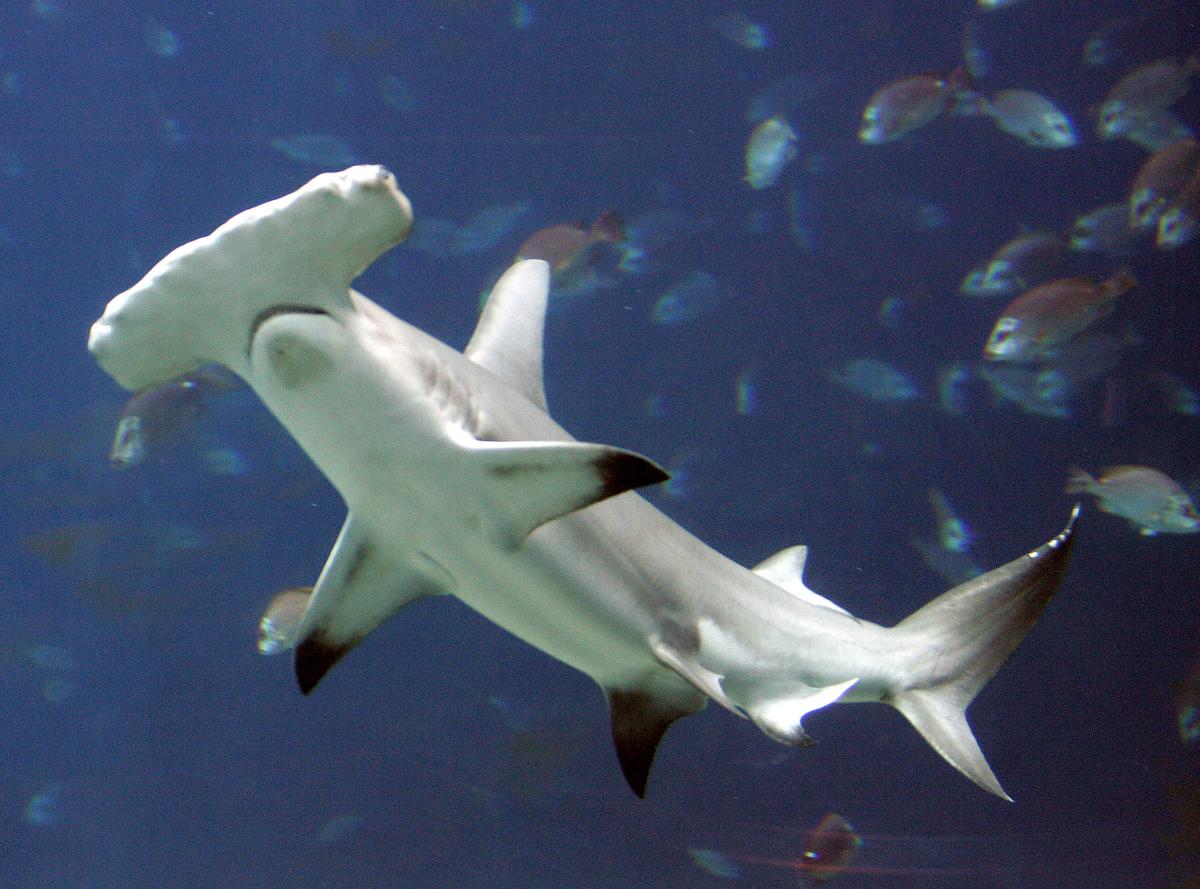
Don't be this dude/lady... those fish impressed by his/her Strava
All of you hard working overachievers have anecdotal stories and evidence of athletes who have bucked these rules of thumb, and lord knows there are a tremendous number of training-idiots out there (one of my favorite nicknames for chronic over-trainers and over-racers is Hammerheads, taught to me by the founder of the Fluffy Bunnies Track Club, David Olds). Hell, I know a few knuckleheads that thought it'd be a good idea to run a series of 6 x 100 mile races with only 2 to 3 weeks of recovery in between them, that's 600 miles (of racing) in less than 3 months. Don't be like those guys. Not scheduling recovery weeks/months into your training season and training year is a little like playing Russian Roulette, it's a fun, adrenaline filled game until you finally pull the trigger and the chamber is loaded.

My first marathon (raced) was in October of 2002. I ran the Chicago Marathon and was 11+ minutes off of my A-goal (2:59), and only 12 seconds away from a Boston Marathon qualification (or BQ), needed 3:10:59, ran 3:11:11. I was super inspired and ready to sign up for an early December marathon (California Int'l). Here's the thing, simply running that December marathon may not have been an issue had I taken 3-4 weeks of recovery. Instead, I kept training hard because I had another race to "prepare for". That Russian Roulette chamber was loaded, and I went down hard with quadriceps tendonitis that took me out of running completely for 10 months (each one of those months is a reason not to overtrain, I'd have killed to have any one of those months back). November of 2002 to August of 2003, I was out of commission. Dejectedly attempted 3 painful runs in that 10 month span. I was not surprisingly depressed about the whole situation. When I finally started back running again in September of 2003, it took me another 15 months to train back up to where I was when I over-trained in the month following my first marathon. That's a 2 year "impatience penalty," a massive price to pay for the inspired athlete.

I have learned a lot of hard lessons in my life (and running career) so that maybe you (my reader, or my athlete) wouldn't have to. So for those of you ready to pull the trigger and sign up for that next race that's only a few weeks to a few months away, I urge you to be conservative with your distance, with your pace/effort, and work more on low-intensity cross training elements to allow your body to fully heal from the effort you just put forth. Especially those of you who ran hard road marathons, you're likely to feel fully recovered in about 14 days post, but your bones, ligaments, tendons and cartilage are not gonna be there (ready for high impact, high intensity training) for another couple weeks after that. Patience is a huge key here. And knowing you're not going to lose much fitness in 3-4 weeks of taking it low key, but you will lose a ton of fitness if you are forced to take 6 months off due to a stress fracture or tendonitis or worse.

Every training year has it's season, which season are you in?
Every athlete who is serious about their racing, and serious about improving, should have 3-6 weeks off of serious training and hard/long running, 1 to 2 times per calendar year. If you ignore this, you're going to be physically or mentally burned out, and your running career will be but a flash in the pan.

Be proud of your race result! Be inspired and absolutely sign up for more races if you want to. Keep your habits and routines going. But always be mindful that training is like weather's seasons, we all need a Spring (early season base training), Summer (peak fitness training), Fall (racing season) and Winter (rest and recovery focused season)...

What season are you in? Don't allow over enthusiasm call the shots in the realm of rest and recovery, just the same as don't let feeling uninspired stop you from training when you need to keep the routine going. See you at the next race, in the next training program, or out on the trails in between...

Friday, November 13, 2015

Bulletproof Attitude & 1 Trick to Develop Mental Toughness Thru the Alvin Matthews Story


Alvin Matthews is a current member of Team NutriBullet (training for the 2016 LA Marathon) and many years ago trained with the SoCal Coyotes in pursuit of running a marathon on all 7 continents. As a runner, Alvin completed marathons on 6 of the 7 continents (and the North Pole too).


In April of 2014, Alvin fell 3 stories off a roof and cracked his cervical spine rendering him quadriplegic. As he healed/recovered and went to PT (after surgery to fuse C5-C7 vertebrae), Alvin's diagnosis was refined to "incomplete quadriplegic" as his paralyzation is chest down. He has limited (and uneven) use of both of his arms and hands, although precious little strength which he's currently working to build back up. Due to the difficulty of working with his health insurance, he has not been to Physical Therapy in over 3 months.


Alvin's first finish line as a wheelchair athlete
Alvin was barely able to complete 200 meters in his wheelchair on his own power 2 months ago. As you may have seen in the video (above), on Sunday, November 8th Alvin completed the Calabasas Classic 5k in 2 hours, 4 minutes and 54 seconds. He pushed up the hills and on the flats on his own power, and on the downhills he had his mentor Ralph (a very experienced wheelchair athlete with 13 years of racing under his belt) and me making sure he didn't slip backwards down the hill, and also to steer/brake on the downhills as he didn't have the strength/leverage at higher speeds to brake. His wheelchair is not designed for racing.


Our plan is to purchase one of these hand-cycles for Alvin!
We (his coaches, teammates and friends) aim to raise $15,000 (or more) to cover the costs of a new racing hand-cycle (a specialized wheelchair that will allow Alvin to restore his strength and health) and put Alvin back into the Physical Therapy he needs to perform everyday functions. Alvin dreams of being able to drive again, he plans to race a marathon on his 7th continent to complete a huge personal goal, and he also plans someday to be able to walk again. Doctors have said cases like Alvin's are a one-in-a-million shot to walk, to which Alvin responded, "why not be the one who does?"


ALVIN'S MENTAL REFRAMING TECHNIQUE
Alvin has a very simple reframing technique when he's struggling: he simply reminds himself that there are people less fortunate than him. Kids and adults in hospital beds, fully quadriplegic and unable to move, to exercise, to perform every day functions. So whenever you are struggling, think of how lucky you are to be able to do what you do. Whether you are a runner or a walker or a hiker, every movement is a gift. Cherish those gifts.


AN INVITATION TO DONATE
Alvin has inspired all those on Team NutriBullet, and on the Coyotes, and in his life. His positive attitude in the face of these challenges is infectious. We thank you for anything, even if only $10. If you can give more, I thank you, Alvin thanks you, his family and his teammates are grateful for every contribution. We will publish our grand total and how much the hand-cycle costs (and how much more we put towards Alvin's return to Physical Therapy). Thank you, thank you, thank you so much.


"​Goodness is about character - integrity, honesty, kindness, generosity, moral courage, and the like. More than anything else, it is about how we treat other people."
-​Dennis Prager


PLEASE DONATE TO ALVIN FUND HERE: http://bit.ly/GoFundALVIN


Thursday, October 29, 2015

5 Reasons People DNF at the Javelina 100 Miler and How to Avoid It (with Wizard of Oz Style!)

Who you callin' cute, sucker?
Post updated/revised:
I originally wrote this post in October of 2015 to put my money where my mouth is (or was). I toe'd the line of the Javelina 100 Miler the following two years (2015 and 2016) in Fountain Hills, Arizona (near Scottsdale, the home of the AZ Fall League's Scottsdale Scorpions, a development team including players from the San Francisco Giants farm/development system, but I digress...). While 2015 was my 21st attempt to run 100 miles (or a little further), it was my first time tackling the cute little pig known as Javelina. No, they aren't really pigs, they are peccaries, which is like a cousin to a pig. I guess some ways this is an interesting parallel because some have been known to say that the Javelina Jundred 100 Miler is "a runnable, fast, good 100 for first timers that is on a relatively easy course." Ohhhhh, boy. That's where the danger begins...

Let's first explore the question of the DNF percentage from 2009-2017 (over 50% who start typically do not finish this race, historically). Why the hell does this "runnable, flat-ish, relatively easy course" have one of the highest DNF rates in ultra running? Some would say that it's the disproportionate amount of first-timers. I would argue that it's not the relative lack of experience that does many in, as I've seen some really experienced 100-mile runners go down here (I am now 2-for-2 at Javelina in spite of two pretty rough years/races). If one doesn't look at what makes this challenge particularly unique, and you expect to suffer less relative to other races, then this is what makes this event so difficult. Here are the starting and finishing stats, and finishing/DNF percentages from the 6 years I crewed and coached athletes for Javelina...

*BEFORE THIS BLOG WAS POSTED, THE SIX YEARS I CREWED/COACHED AT JJ100*
2009 - 250 started / 124 finished (49.6% finished, 50.4% DNF'd) - Sub 24's = 38 (15.2%)
2010 - 263 started / 137 finished (52.1% finished, 47.9% DNF'd) - Sub 24's = 50 (19.0%)
2011 - 339 started / 174 finished (51.3% finished, 48.7% DNF'd) - Sub 24's = 65 (19.2%)
2012 - 364 started / 160 finished (43.9% finished, 56.1% DNF'd) - Sub 24's = 56 (15.4%)
2013 - 377 started / 157 finished (41.6% finished, 58.4% DNF'd) - Sub 24's = 41 (10.1%)
2014 - 511 started / 290 finished (56.8% finished, 43.2% DNF'd) - Sub 24's = 98 (19.2%)

2009-2014 TOTALS:2,104 started / 1,042 finished (49.5% finished, 50.5% DNF'd) - Sub 24's = 348 (16.5%)


2015 JJ100, Lap 2 (old course) - photo by SweetM Images


*AFTER THIS BLOG WAS POSTED, THE TWO YEARS I RAN JJ100*
2015 - 
459 started / 281 finished (61.2% finished, 38.8% DNF'd) - Sub 24's = 113 (24.6%)
2016 - 574 started / 285 finished (49.7% finished, 50.3% DNF'd) - Sub 24's = 93 (16.2%)

*LAST YEAR*
2017 - 534 started / 348 finished (65.2% finished, 34.8% DNF'd) - Sub 24's = 113 (21.2%)

2015-2017 TOTALS:
1,567 started / 914 finished (58.3% finished, 41.7% DNF'd) - Sub 24's = 319 (20.4%)
2009-2017 TOTALS:
3,671 started / 1,956 finished (53.3% finished, 46.7% DNF'd) - Sub 24's = 667 (18.2%)


Having crewed and coached over 30+ athletes who've run Javelina, and now having back-to-back years suffering through it myself, I am here to tell you how I've seen people shoot themselves in the foot. Some of this is general 100-miler stuff, and a few things are unique to Javelina. So, here we go...


5 SIGNIFICANT REASONS PEOPLE DNF AT JAVELINA

#5- How about a little fire, Scarecrow? (not managing the heat... well enough) - this race is super exposed and relatively hot. It is generally not humid, and most certainly Arizona sees typical temps that are ~30 degrees higher at times in the summer. Javelina seems to trend around a high of 80 degrees, give or take 10 degrees. So 90 is a blistering hot year, and 70 is a "cold year". But here's the problem, it's exposed. You never get a respite from the direct sun, unless there's no sun (or you're sitting under a tent, not moving forward on the course). The sun beats down on the trail (and you) relentlessly, and Laps 2, 3, and for some 4 (and 7) are hard on you like it's 10 degrees hotter. It might actually be a few degrees hotter. As the sun bakes the trail throughout the day, the heat emanates off the trail below you and it will hit you a little harder than if you were running in the shade. So, pretend it's 10 degrees hotter, and keep ice in a bandanna around your neck, fill your running cap with ice, and do not drink ice water.

Momentary heat side-track: if you drink ice water in your bottles when that cold water hits the stomach, the body is forced to use energy in order to warm up that liquid inside your body to match that of your body's natural internal temperature. This process will rob your body of the energy it needs to properly process what fluid (and calories and electrolytes) you've ingested. So energy is spent on the regulation of the internal fluid temps, rather than processing new fuel/energy and it is a super big deal as that energy deficit adds up in the heat of the day.

Cold water (or ice) is for your head and neck. Warm or air temp water is for drinking. If you're running, your body is generating more heat (than if you're moving much slower). So during those hot laps (when I've seen some speed up), slow it down a little to help manage your core temps.

#4 - There's no place like home, there's no place like home! (getting too comfortable at the start/finish with family/friends) - this is one of the chief problems with the mental DNF at Javelina, being at the place where all your finishing crap is! And your lovely family! And when you say in the middle of the night, "I don't want to do this anymore, I'm not having any fun" sometimes you have a crew that's thinking, "thank effen goodness, we're so ready to be done too!" 

Know that you pass through JJHQ around Mile 15.5 (one), Mile 31 (two), Mile 46.5 (three), Mile 62 (four), Mile 77.5 (five) and Mile 93 (six), and if you think you'll get through JJHQ excited to leave for another 15.5 miles in the dreaded desert every single time, think again. You're gonna feel the suck at least 2 of those 6 times, possibly more, so you've got to have a plan to get in an out of there efficiently. Don't rush it, you need to get stuff for another 2-5 hours out there. "Be quick, don't hurry" (one of my favorite Coach John Wooden quotes). But unless you're fixing blisters at medical, doing a complete outfit change for the night, there's really no reason to be there for more than 5 minutes. Get out. Don't sit down (except to change shoes, if you must). Keep moving. Get your mental juju back by taking steps towards the finish line.

#3 - Poppies, poppies, poppies. Sleeeeeeeeep! (the curse of naps and mismanaged caffeine) - I would love to dive into the science of why you should try to avoid caffeine during the day when it's hot. But this post is going to get way too long (it's already twice as long as I intended). So let me put it in another way, you want to save caffeine (and other stimulants) for when you actually need them. Your hypothalamus is going to try to power things down in your body so you can sleep (restorative regeneration) while you're still running if you run long enough. So save the inner light for when it gets dark. And once you start using caffeine, you better keep using it or your energy will fall off a cliff. I like to try to keep the stream coming every 25-30 minutes once I start, but at the very least I'm getting it at every aid station once I begin to use it. Also, if you get really, really tired, some get to the start/finish and try to sleep and rationalize when they wake up they'll feel better (and be able to run better). In my experience, this is rarely true. And you wake up in 90 minutes when you planned for 30. And now you're fighting cutoffs. So don't do it. Manage your mind, your stimulants, and keep on keepin' on.

#2 - Ring around the rosy, a pocket full of speed! (getting carried away with pace splits in the first two-three laps) - Okay, so the Wicked Witch of the West said spears, not speed. But hey, if you run too fast your quads, hamstrings, IT bands are all going to feel like the Wicked Witch put a bunch of spears into you. I have witnessed more "speed kills" at this race than every other 100 miler I've been to combined. I've seen runners with a 28+ hour 100 miler PR running around 17-hour pace splits. Just running comfortably, and aerobically is not enough. A marathon race pace is aerobic and comfortable for 20-ish miles! Then you go into ketosis when you've exhausted your glycogen supply and you're fighting cramps and you are metabolically hosed. Marathon pace plus one minute is more like a 50k pace. I don't even recommend running by pace. For those of you not running with a heart rate monitor, it's going to be a little more tricky. If you've never run 100 miles before, you've got to be even more careful and conservative. Think of it this way, around 20% of the nearly 500 race starters ran sub-24 hours last year. Are you typically in the top 20% of the races you finish? Because if you're not, you're pretty bold going out in sub-20 hour pace and rationalizing that you're putting time in the bank. Putting time in the bank is like tying a loaded safe to you so you can run the second half of the race dragging said safe behind you. A sub-20 hour time is around 11:45/mile pace (or faster). Yes, we all factor in stop time (which is generally around a minute per mile or more), so really, we're talking 10:45 average running pace. "But I can't run that slow!" many will exclaim to me. That's what walking up small inclines is for. Or just taking a walk break to lower your heart rate. Running faster than 12 minutes per mile in the second half of the race is actually quite impressive, so try to bring your first half and second half paces closer together so you can be the one passing dozens, or even 100 people in the second half. Now that's a fun race!

#1 - I'll get you my pretty, and your little dog too! (not taking the suffering seriously) - I'm going to break this one into two different categories, the beginner, and the experienced 100 miler...

1st Time 100 Milers - so you've never experienced 100 miles yet? Maybe you've run a few 50 milers or a tough 100k, but this is your first journey into those extra 40-50 miles of pure magic. People tell you it's going to hurt, but there's no context to it. You may have even heard moms who run hundos compare it to childbirth. Kinda freaky, right? But hey, it didn't scare you that much, and here you are! Pitfall #1 is thinking of 100's in a linear or proportional fashion. It doesn't hurt twice as much, nor twice as often as a 50 miler. In some cases, it's worse than that. In others, it's not that much worse pain wise, but you're in that hurt locker for a lot longer. It takes mental stamina, toughness and a willingness to suffer a bit. You really aren't going to know if you're mentally ready until you're in that moment. But what I do is measure the number of hours I've put into training (for me, this time around it's about 250 hours, or 10 hours a week average for the past 25 weeks, I'm rounding off here, but that's a ballpark). Then, when I'm hurting, I tell myself, "this isn't going to hurt like this for the rest of the time, but even if it did, that's only 10 more hours (example), and that's not even 1/20th of my training!" I tell myself to consider others who wish they could be running by my side. My wife just had leg surgery. My buddy Alvin would love to run a loop with me (he's in a wheelchair now). I'm so lucky to be able to hurt this way. I'm so lucky my body is capable of this amazing, freaky endurance. I keep telling myself these things to re-frame the pain. And believe me it helps if you commit to it. So when it really hurts, the worse it is, the more proud you're going to be of finishing. I've heard it said very eloquently that "finishing 100 milers hurts for a week. DNF'ing 100 milers hurts for at least a year." So, get along little doggie...

Experienced 100 Milers - the main pitfall with an experienced hundred miler at Javelina is you've probably run much harder courses than this. You've maybe even run on hotter days than this. It's dangerous to think that because the course isn't as hard, and the heat isn't as high, that you'll suffer less. Then, when you suffer more, you're ill equipped to handle it psychologically. Here's the rub: this course has more running. The more you run, generally speaking, the more it's going to hurt. I ran 6 of these things last summer, and Vermont (while my fastest race last summer) was the race I was in the most disrepair at the finish line. My feet were wrecked. I was in the medical tent for a bit. Running more is really rough, especially for those of you who are used to mountain races when you get your hiking uphill break, then downhill feels like low-effort since gravity is doing the work. Maybe you don't feel that way, but if you want to run your fastest time at this distance, you at least have to be willing to hurt more (and for a longer duration) than you have before. Then, if you don't, it's a mental boost. Gravy, my friends.
Follow the Pemberton Trail, follow the Pemberton Trail... follow, follow, follow, follow...

I have a lot more to say about running 100 milers, but I'll save it for another time. I hope these 5 pitfalls help you overcome the Wicked Witch of the West at McDowell Mountain Park. I'm rooting for all who toe the line at Javelina. I want a bunch of people to high five and run with in that second half. And if you see me sitting down, come kick my ass and tell me to get back out there (unless I'm being carted off on a stretcher, then let medical do their job)...

2016 JJ100 Lap 3 at Jackass Junction - photo by SweetM Images

Jappy Jalloween, Jeveryone!

Thursday, September 10, 2015

3 Essential Steps to Stop Self-Sabotage Once and for All

"To be a champ you have to believe in yourself when no one else will."
-Sugar Ray Robinson


There are plenty of cynics in this world. Even if someone doesn't self-identify that way, we all have that dark little voice telling us the reasons we can't accomplish something, the reason things are destined to fail. What's worse than telling ourselves something isn't possible? Telling someone else that their dream isn't possible. One side step to that that's even more insidious, is telling other people that someone else isn't capable of something (ahhh, vicious gossip).

While you may not choose to acknowledge that you are indulging your inner bully, what else can you call it if you're being straight up about it? Start by making a choice to listen to your inner bully, then tell him/her/it to "take a long walk off a short pier". Or you can tell it to "Go F**K itself!" Whatever you need to break from that pattern of thinking long enough to get something done.

Step 1: Choose to believe you're capable of more than you can ever imagine. In some respects, you might be in the paradigm of fake it til you make it here. When you get to the point you believe in yourself, know that this isn't a permanent condition, nobody transcends that inner bully, at least nobody I've met yet.

Step 2: Surround yourself with people who are adult in their self-respect, and childish in their belief in chasing dreams. The adult part is important, as people who behave as children across the board are prone to childish jealousy, gossip, and feeling bad for themselves when you succeed. Your victory becomes their insecurity. The part that is childish (dream chasing element) is key because a lot of so-called grown ups are bitter, jaded and cynical. As far as I can tell, a very high percentage of these people have lived responsible, reasonable lives, and have at some point in time given up on something they really, really wanted to chase after.

Step 3: Foster an environment where you empower others in their goals and dreams, you become a champion vs the inner bullies of others. This can take many forms, but it starts with recognizing the red flags of others' inner bullies, and taking a stand for them to overcome. Interestingly enough, Step 3 is the most essential to maintaining Steps 1 & 2, as when our focus expands to community (instead of self), it's much more difficult to indulge in bad habits. When you put your focus on others, I find you also elevate your personal game. When you stand for excellence in others, you naturally trend towards maintaining your own excellence. Vanity helps here, nobody wants to be viewed as a hypocrite.

To expand a bit on the community focus, I have long had a rule for myself as a coach, but even more so as a human being:

"Never tear down the dreams or goals of another human being."

That's the baseline. But when I am living and breathing it, "another human being" will also extend to me, I'm not allowed to tear down my own goals and dreams.


A shout out to my friend (and mentor) Robert Mills, a man who hired me to coach one of his marathon programs before I had even really run a marathon myself. Yes, you read that right. Marathon program #1 (I'm now closing in on my 40th program coached), I had not even RUN a 26.2 mile footrace myself. Now, looking back on 13 years of marathon experience, I've finished over 60 races of 26.2 miles up to 135 miles in a single shot, having coached 2,500+ athletes to achieve their goals and dreams. But it started with believing in myself even if not 100%, and finding others who did too. Again, thanks to Robert and Euri, and especially that champion who's been at my side for all of that, my beloved Kate.

Call to action:
1- What big goal / dream are you chasing after actively now?

2- Is there a back-burner goal/dream that you haven't taken any action on in a long time? (i.e. something you keep telling yourself you'll go after when you're ready, just not now)

3- Who could you share these with that would stand for you being accountable to chasing these goals and dreams?

4- Who could you stand for to get on track with their goals and dreams?

"A goal is not always meant to be reached, it often serves simply as something to aim at."
-Bruce Lee

Monday, July 21, 2014

The First Steps (Out the Door) Are Often the Toughest - Original 6 Hundo Challenge aka #O6HC Blog Entry 01

"You are capable of more than you know.  Choose a goal that seems right for you and strive to be the best, however hard the path.  Aim high.  Behave honorably.  Prepare to be alone at times, and to endure failure.  Persist!  The world needs all you can give."
-E.O. Wilson

*Original 6 Hundo Challenge (#O6HC) - the first six hundred mile trail races to exist in the United States, in order of inception: Western States, Squaw Valley, CA to Auburn, CA (1974), Old Dominion, Fort Valley, VA (1979), Wasatch Front, Utah (1980), Leadville Trail, Colorado (1983), Angeles Crest, Wrightwood, CA to Pasadena/Altadena (1986), and Vermont (1989)  * - this challenge has historically been known by the title the Last Great Race which is presently "on hiatus".  Out of respect to the organizer, we've chosen to call the challenge another name until we are able to register for the LGR officially.


It's been quite a 9 month stretch since I completed the 2013 Angeles Crest 100 (AC) and Leadville Trail 100 (LT) inside of a two week period (well, 2 weeks, 1 day and a couple-few extra hours).  I spent about 10 days post that 100-mile double challenge hibernating, as it f**king wrecked me.  So, sounds like a perfectly rational idea to run 6 hundreds (the first 6 hundred mile trail races that existed in the United States) in a 13 week period, right?!?  A long-standing motto of mine: the worst ideas often make the best stories.


To begin with, I blame the seed for this idea being planted on Andy Kumeda.  In 2007, we were chatting in Wrightwood awaiting the check in for the Angeles Crest Endurance Run.  Andy had attempted to run these same six races in 2007 and going into AC Andy was 4-for-5 having timed out at that year's #4 (Leadville), at Mile 60.  I was still floored, as he had finished the Wasatch Front 100 (WF)  in 35:57 (with less than 3 minutes to spare) and was attempting to complete AC only 6 days after that finish.  The 2007 Angeles Crest became my first ever DNF at any race of any distance (it was my only hundred attempt in 2007). I pulled out about halfway through (Mile 49, Mt. Hillyer) with some breathing problems that may or may not have been hypoxia or the early stages of hyponatremia.  Andy finished AC with a couple/few hours to spare.  He vowed to give these 6 hundos another shot as soon as he got back into the Western States 100 (States), and 7 years later, here we are.

I personally loved the idea of The Grand Slam of Ultrarunning (the Slam) which is 4 of the original 6 hundreds, about one per month, but have some longer term goals at Angeles Crest, so while I wanted to run Western States, the Vermont 100 (VT), Leadville and Wasatch in the same summer, I felt too impatient to skip AC for a summer (FOMO in LA is particularly fierce).  Angeles Crest used to be late-September/early-October as recently as 2008, but has been moved to July/August since the devastating Station Fire in 2009.  Now, with AC in late-July/early-August, it's sandwiched in between the only 4 week break in the Grand Slam, 2 weeks after Vermont, 2 weeks prior to Leadville.  I realized I'd be doing 5 of the original 6, looked up Old Dominion 100 (OD), which was formerly a part of the Grand Slam, between 1986 when Tom Green first finished OD, Western States, Leadville and Wasatch in the same summer, and Tom is at it again this summer 28 years later (Go Tom Go!). Old Dominion was a part of the Slam until 2003 when OD did not happen and Vermont has formally replaced it in the Slam every year since.  Since my modified Grand Slam (the Slam+AC) only allotted 2-3 weeks between each race, it didn't seem like much more of a stretch to throw in OD 3 weeks before that all began.  NOTE: I joked far too often that Old Dominion was my "warm-up race" and that joke bit me in the rear.  OD kicked my butt, and I was taught that joking about how one race will be easier is a very dangerous mental space to be in.


The Torrey Pines Glider Port (Cliff) Stairs and Blacks Beach
I DNF'd for the second consecutive February at a SoCal 50 mile race (2014 was the inaugural Sean O'Brien, a race I helped lay out, and test ran in October to create an elevation profile, and 2013 I failed to finish the Ray Miller 50 Mile before going on to complete Angeles Crest and Leadville later that year), and I'm holding my breath that it was a good omen (although I have to work out my string of lifetime DNF's the second time I run a course which includes 2 hundreds and 2 fifties).  That was a wake up call.  Training got a lot more consistent after that.  Life, however, failed to cooperate with my extended training plans for this challenge.  From February to late-May, ultimately I averaged 47.5 miles per week, which included an entire month where my mileage total didn't eclipse 62 miles (for the entire month!).  At one point, spent about 2 weeks with my mom who had a horseback riding accident that led to her fracturing L1 and requiring some significant medical care for the first phase of her recovery.  I got to know the running available in La Jolla, California pretty intimately as I'd help administer my mom's meds and home care, then head out the door for a couple hours of sand running & cliff repeats near the Torrey Pines Glider Port & Blacks Beach.  Looking back on this, it may have been the longest half month of my life.  Seeing a loved one that injured is beyond any emotional or physical stress I have ever experienced.  My mom is greatly improved (3 months into her recovery) and may have dodged a bullet not immediately needing a major 5 vertebrae spinal fusion surgery.  Yay, mom!  Got really sick for about 8 days after that, and didn't feel like myself (running or otherwise) for another 3-4 weeks.  When all that dust settled, I was 3 weeks from race #1 in the #O6HC


"Good judgment comes from experience.  Experience comes from bad judgment."

-Mark Twain


Instead of going through and writing a blow-by-blow recap of the 3 one-hundred mile races I've already gone through (which I promise to recap via podcast or video-blog, at the very least), I'll let you know a few of the epiphanies and reflections that could hopefully be more useful to you in your running or life goals.


*Never underestimate 100 miles  - researching all 6 races in this series, both Old Dominion and Vermont had the least aggressive elevation profiles and fastest historical finishing times.  I went into OD saying, "this is my warm up 100" and the race beat me down pretty soundly.  Kate has seen me run this distance at least a dozen times, and said she had never seen me looking that broken at the end of a race.  Every 100 will have it's own unique (and idiosyncratic) challenges.  Respect the distance.  Respect the conditions.  Seek to uncover the hidden challenges of an event prior to starting.  I was geared up for the challenge of the humidity, when my left peroneal tendon went out, I realize I had never considered what cambered country roads would do to me.

*Plan to flow (and how to flow when the plan disintegrates) - mentality conditioning is as important as physical conditioning in difficult life and running adventures.  Look to unlock your Zen by practicing some mantras and putting forth a positive perspective (or assigning silver linings to tough situations) in training and in life, prior to the adversity that will inevitably find you in your goal events.  In the early stages of the Vermont 100, I noticed a piece of trash on the trail, which I picked up to put in my handheld water bottle sleeve.  The paper, when examined, was from a fortune cookie.  The fortune?

"You can't control the wind, but you can adjust your sails."


Frolicking at Western States around Mile 38
This thought stuck with me the rest of the day.  I couldn't control when/where my difficulty would arise, but I could determine what attitude I approached the difficulty with, and make adjustments to my plan for that race.  That sourced me the rest of the day and worked very, very well.


*Far more fun to be had rooting FOR people than wasting energy rooting AGAINST someone - I have met and enjoyed the company of no less than 30 people over the 300 miles Andy and I have covered thus far (in Virginia, NorCal and Vermont).  To qualify that, I've talked to more than 300 people, but have held at least 3-5 minute conversations during the race, with probably around 1 person every 10 miles.  I love hearing a person's (aka new friend's) story.  Why they do this crazy $#!^ too, what they are up to in this one precious life of theirs.  First half of the race it's generally talking about life, goals and dreams type of stuff.  Second half of the race, often times we're talking about problems we're having, a running issue we need to trouble shoot, (adjusted) goals for the race, and how we can help each other achieve them.  The last time I remember actively rooting against some one (save any member of the Los Angeles Dodgers, LA Kings, or Dallas Cowboys) was Rollie the Goalie after seeing his cheap antics of the 2006 NHL Playoffs.  Honestly, don't even ask.  When it comes to ultrarunning, a few people have made it clear to me that they are rooting against me (again, don't ask) and I can't even find the energy to return favor.  There's so much goodwill, and positive humanity around 100 mile mountain races, I find that I want everyone to have their best day.  We all know we're in for trials, for discomfort or bone-jarring pain, and the day/night/day will be an adventure.  The kinship this activity breeds is what makes this community so special to me.  So even if I get it in my head that I want to "finish before you do" which never equates to me as "beating someone" as there are only a few rare friends I even think this way about (Mike Chamoun, Karl Hoagland, Eric Wickland, George Gleason, Kate Martini, etc.), I still want you to have your A+ day out there, and want it to be a fun story for both of us to share a beer over when we're long since old-and-gray.  So do what you can out there to help people succeed, yes, help your fellow competitors.  It will make you feel better (and forget your current issues for a moment).  That good mojo will feed back into your race.  But don't do it for the mojo.  Do it because you want to see yourself as kind, generous and graceful.  Never know, you might turn someone's day/race around.  That feels better than a finish (to me).

I could wax on (and wax off) a lot longer on these things, and these three races.  But there's a lot more decompressing to do, and 3 more races to "run".  I'm going to sign off now and get this thing up, as it's been too long a dry spell for this #WannaBeWriter

Tuesday, February 25, 2014

But I Don't Feel Like It Anymore - Commitment vs Feelings and Why You Should Do It Anyway

"Success is peace of mind which is a direct result of self-satisfaction in knowing you made the effort to become the best of which you are capable (of becoming)."
-Coach John Wooden


My first career (1995-2001) was inside and outside sales for a technology firm in Silicon Valley during the dot.com boom/bubble years.  That's a fancy way of saying that right out of high school I got a job working for my father's business partner Paul on business development of a new territory.  The new territory?  Southern California.

From 1995-1997 I went to school full time and worked part time developing new business making cold calls from a business guide.  This is prior to major & minor companies having robust websites and prior to Google telling me how to find any information on any company, product or person that has a public presence.  I had only an encyclopedia sized book, a company name, their product line and a phone number.  It was my job to call the receptionist, and somehow talk my way through the web of that company to get to someone who purchased electronic components from other companies to make the product that they sold.  Simple enough, right?  Only problem was that the bigger the company, the more intricate the web of people who didn't know what anyone else did, not to mention the bulldog receptionists and personal assistants that were hired and trained to be a firewall against calls like mine.


Paul, my mentor/boss, has completed many endurance rides/runs.
In 1997, Paul (co-founder of the company, Signet Technical Sales, later Signet LCD and then IDS) offered me a full time position.  I accepted and stepped full tilt into the corporate world, which included 10-15 hours a week of commuting (to and from San Jose) and 40-60 hour weeks.  "Salesmen have no hours!" Paul used to say, much like Alec Baldwin's character from my favorite movie about sales, "Glengary Glen Ross."  Back then, I would spend most of my day dialing up strangers and asking for a favor, "please tell me who I need to talk to who makes the decision on purchasing these parts for your products."  I got really clear that there were going to be good days and bad days.  Days I felt inspired to do it and days I didn't want to pick up the phone to encounter 43 more rejections in 44 calls (and the 1 other call was a voicemail).

My last full year at Signet (2001), I stopped commuting.  I moved from San Francisco to San Jose, and cut my 3 hours of daily driving to 15 minutes each way.  I suddenly had 2 to 2.5 hours per day I didn't even know what to do with.  I was inspired, energized and ready to train for my first marathon, something I had put off for 5-6 years.  I committed to run my first 26.2, which was actually the second time I made that commitment (it was first a New Year's Resolution in 2000, until I didn't feel like training anymore, about maybe 19 days later).

I had signed up for the San Diego Rock'n'Roll Marathon, I also booked the round trip flight from San Jose to San Diego for early June and I hired a coach to help guide me (shout out to Coach Kaley, the first coach I ever hired).  Problem was, I was overeager.  I trained myself right into an overuse injury (ITBS) within about 2-3 weeks.  I wanted to run, but I couldn't.  So Coach Kaley (a very talented triathlete) started working with me on swimming and biking (as much as sitting on a spin bike can be considered biking).

I cross trained for a full month, until I just didn't feel like it anymore.  My knee hadn't improved, and I still had pain after mile 2 on basically every run I'd go on to test it out, about every 2 weeks.  I stopped training altogether.  That was mid-February.  Late-May came up on me fast and I realized I had a trip to San Diego (flights booked, accommodations made) and suddenly I was feeling inspired again.  So I went for a few runs to shake off the rust, determined my knee didn't hurt at mile 2 anymore and flew to San Diego.


*Note: this is NOT my bib # from 2001
Along the way I had raised maybe $500-$900 for the NCCF, but it was all in $1-$2 per mile sponsorship donation checks.  I was certainly not fit for 26.2 miles straight, on roads.  But I also felt a sense of obligation to finish what I started since I couldn't donate checks for the amounts they were written out for if they were based on the miles I had committed to doing.  I was in a quandary: do I run a marathon and put myself at risk of re-aggravation of this injury that put me down for 3-4 months?  Do I not run it, yet send in the checks anyway?  Do I not run it and send the checks back to their donors?

I went into the marathon expo on Saturday and again was inspired by all the fit, healthy people. There were many charities there with teams, and coaches, and team colors.  I knew I had to send these checks in.  I also knew I needed to run the distance.  I also didn't want to spend another 4 months not being able to run.  I decided to walk 13-14 miles, Saturday.  I got the course map and followed it until I got to a freeway entrance (94 out of downtown SD) and elected to do another lap around Balboa Park.  I wrapped it up in about 4 hours (about 17-minute mile pace) and went to visit my sister for dinner in La Jolla.  Sunday morning I caught a cab to Sea World, and at about the mile 14 mark I waited for the race to come by.  I watched the elites, the sub-3 national class athletes, the age groupers, and somewhere about an hour later jumped into the fray.  Again, I walked more than I ran, but I was coming up against my feelings of failure, the disappointment I wasn't an official participant (it was a chip race, and I'd never show up in the results).  But on the other side of those negative feelings, I was doing something maybe for the first time in my life, that wasn't going the way I envisioned it, and I was finishing it anyway.  My watch read 6-hours, 17-minutes when I hit the 26.2 mile mark, and based on when I started the day prior, my unofficial time would have read 22-hours, 17-minutes.  By all measures of marathon finishes, I was a DNS (on Sunday) or a DNF (on Saturday).  Two half marathons in back-to-back days is not a marathon.  But I sent in those checks and wrote a letter to everyone who donated, "I am happy to reimburse you if you object to the way I completed this marathon, and here's why you won't find me in any official results...".  It was a huge turning point in my life.


Officially finished my 1st marathon 16 months later.

Even today, I still come up against the feelings of "I don't want to train today, I just don't feel inspired or motivated to do it." and some days, those feelings win out.  But more often than not over the past 13 years, I cast my feelings and lack of motivation aside, and ask myself, "what am I committed to?" and often, the answer is pretty simple.  When you ask yourself what you're committed to, and weigh it against what you're feeling, whatever is bigger wins.  So my commitments have become huge, 'larger than me' type challenges, such that my fickle and ever-shifting feelings can be good, bad or ugly, but rarely are they bigger than my commitment to the goal.

You won't win this battle every day.  But the more you play this game, the stronger at "being your commitment" which is essentially "adhering to ones principles" instead of empowering your feelings which can change moment to moment, day to day and are as unpredictable as the weather.

What are you committed to?
*post a comment below and declare what you're committed to!

Wednesday, February 05, 2014

Heavy Lifting for the Runners' Mind - My Film List for the Mental Game

I'm fresh off of my second 50 mile DNF (both coming the first weekend in February on my sophomore run of a course in my Santa Monica Mountains backyard).  I know that my body didn't respond, part of which could have been just having an off day, and part of it definitely being undertrained.  I don't regret being undertrained, as my focus is on Summer 2014, and I now know there's no way I'm peaking too early.  But that's also my self-justification for not doing enough of the necessary grunt work, laying the foundation brick-by-brick.  I'm out the door for a run in a few.  One day at a time.  All that said, until my body failed me, my mind was solid in spite of a great number of problems out there.  That is one of my take-aways.  I have 4 months (or 17 weeks) to get in peak 100 mile shape.  I know my mind is ahead of that curve.

"Like success, failure is many things to many people.  With a positive mental attitude, failure is a learning experience, a rung on the ladder, a plateau at which to get your thoughts in order and prepare to try again."
-W. Clement Stone


Get to work on your mental game.

It seems like a general and broad-sweeping stroke.  But here's what I mean when I say that.  Workouts and physical fitness are only about half the story when it comes to setting new personal standards in speed or distance (or both).  You must develop the mental makeup so that you don't mentally breakdown.  There are a lot of ways to get there, and generally speaking, a coach will implement these things into your training runs (sometimes overtly and often times, like in my case, covertly).  You can always improve your mental game.  I love reading inspiring books and watching inspiring films (they absolutely do not need to be about running to be good for your mental game).

Here's a list of a few movies that really stoke my mental fire.  What I mean by that?  I cry tears of joy, tears of anguish and tears of being moved by the human spirit each and every time I watch them:


THE DISTANCE OF TRUTH
Ferg Hawke running through the valley of death
MY TAKE: A searing documentary about the BADWATER 135 Ultramarathon (aka the World's Toughest Footrace).  I've crewed/paced this race 3 times now, and I'll be stoked to be help another friend get this done this year, even though I can't attend the race.

SYNOPSIS: This 90-min documentary features Canadian Ferg Hawke as well as Scott Jurek, Dr. Ben Jones, Charlie Engle, Ray Zahab, Monica Scholz, Pam Reed, Dean Karnazes, Marshal Ulrich and Mike Sweeney as they experience the BADWATER Ultramarathon. Footage from both the 2005 and 2006 races are included as well as interviews, course profile, blister care and finish line drama. The race itself is broken into the six legs and even after 90 miles three athletes are separated by only about a mile and a half. The finish is amazing with records falling and 11 athletes are shown crossing the line.

WHY YOU SHOULD WATCH THIS: Because if you're reading one of my blogs, let's be honest, you're already pretty silly, and there isn't much sillier than running 135-miles through Death Valley in the peak of summer heat.  In case of invisible self-limiting barriers, break glass (ceiling).  This movie will leave you without valid excuses.

QUOTE I LOVE: "If you run long enough, something is bound to happen."


RUDY
How many setbacks must one endure to realize an impossible dream?
MY TAKE: It is slow at points, but then again so is life.  If you patiently entrench yourself in this story, you'll feel Rudy's passion, his devastating lows and triumphant over-coming of long-shot odds.  I love this movie.

SYNOPSIS: Rudy has always been told that he was too small to play college football. But he is determined to overcome the odds and fulfill his dream of playing for Notre Dame.

WHY YOU SHOULD WATCH THIS: You don't have to like college football, this is a movie about having a tenacious spirit and chasing impossible dreams.

QUOTE I LOVE: "In this life, you don't have to prove nothin' to nobody but yourself."


CHARIOTS OF FIRE
What inspires you to run fast?  Old dares do it for me.
MY TAKE: Also takes some time to build into things, but each scene is vital in a really well woven piece.  It examines the why of two Olympic runners.  One runs to "feel God's pleasure" and another runs from an absolute terror of being second best.  Love vs Fear.  A perfect examination of life.

SYNOPSIS: The story of two British track athletes, one a determined Jew, and the other a devout Christian who compete in the 1924 Olympics.

WHY YOU SHOULD WATCH THIS: It doesn't matter why you run.  It matters that you run (see: exercise).  This movie will have you examining why you run and when you run and may enable you to get the most out of your mental game by determining your mental outlook.

QUOTE I LOVE: "I've known the fear of losing but now I am almost too frightened to win."


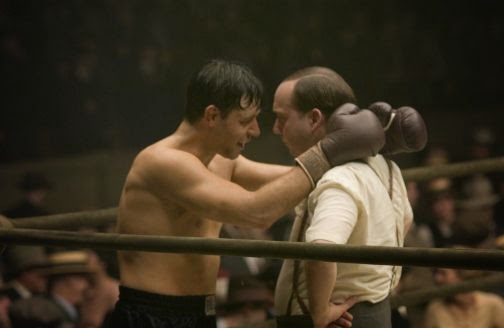
CINDERELLA MAN
Buoyed by great performances and Academy Award nom for Giamatti
MY TAKE: One of my 2-3 favorite films of all time (the other 2 are Shawshank Redemption and Crash).  I love this movie for so many reasons.  It will make you feel.

SYNOPSIS: Based on the true story of fighter Jim Braddock, who in Depression-era New York enters the boxing ring out of desperation to feed his family. He becomes a common folk hero as he battles his way up the ranks, vaulting from broken-down ex-boxer to living legend with a string of amazing upsets to his credit. As word of the scrappy underdog spreads, entire families stay glued to their radios, cheering, praying and experiencing his victories as their own. Their devotion reaches fever pitch when Braddock faces heavyweight champ Max Baer. That night, Braddock's dignity, courage and determination gives hope to a nation and earns him the nickname of Cinderella Man.

WHY YOU SHOULD WATCH THIS: You don't have to like boxing, nor be a fan of Russell Crowe or Renee Zellweger.  This movie is about choosing to get back up after getting knocked down (no matter how many times you hit the mat).  Boxing may be a perfect analogy for life in the courage to get back up off the mat when life is punching you in the face.  Give in to this movie.

QUOTE I LOVE: "For two hundred and fifty dollars I would fight your wife... and your grandmother, at the same time." 


UNBREAKABLE: THE WESTERN STATES 100
http://www.ws100film.com/
Photo by Luis Escobar, RD of Born to Run Ultras and Red Rock
MY TAKE: This is JB Benna's masterful weaving of a story about living outside the box, challenging one's perceived limits and going into that unknown void and seeing what part of you comes back from it.  This movie inspires me for many different reasons.

SYNOPSIS: This is the story of the 2010 competitive men's race in the granddaddy of trail ultra runs, the Western States 100.  In addition to following 4 of the top ultra runners in the world, it tells much of the story of how the Western States Endurance Run came into being.

WHY YOU SHOULD WATCH THIS: Because everyone faces their mental breaking point in a race that means a lot to us.  Sometimes our expectations, our goals, or even the conditions in the race can break us.  Sometimes it's our competition.  But watch how these competitors respond to being broken, and what they do in the face of it.  Warning: it might make you want to run Western States, or 100 miles, or both.

QUOTE I LOVE: "I can still take one more step. And so at that point I decided to take one more step until I could not longer take one more step." 


HONORABLE MENTION - Other Films I Love for the Mental Game
The Fighter, Finding Nemo, Rocky, 300, Rocky IV, and many more...


THE BOTTOM LINE
We could all use a little (more) work on our mental game.  These 6 movie-films will help you with that (and I threw in 5 more on the HM list a few sentences above this).  Hope you enjoy them as much as I do.  Let me know what you think, especially if you see them now (with new perspective).


If you have other films you love watching, post a comment below and let us know what films help you with your mental game!